RCC Elevator Shaft Construction in Noida – Everything You Need to Know
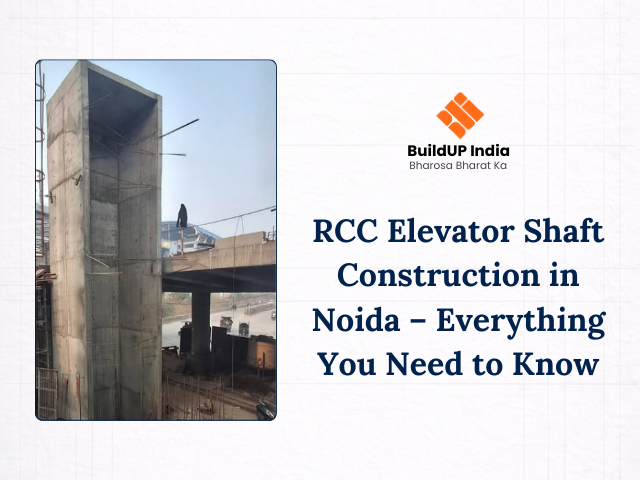
RCC Elevator Shaft Construction in Noida – Everything You Need to Know

Category
Shaft Construction
Date Released
26 December, 2025
When it comes to safe, durable, and long-lasting elevator infrastructure, RCC elevator shaft construction plays a critical role. In a rapidly developing city like Noida—known for high-rise residential towers, commercial complexes, IT parks, and mixed-use developments—the demand for properly engineered elevator shafts is higher than ever. Choosing the right execution partner and understanding the technical aspects of RCC elevator shaft Noida projects can save time, cost, and future operational issues.
This detailed guide explains everything you need to know about RCC elevator shaft Noida, from design and construction process to safety norms, challenges, and how BuildUP India approaches shaft construction with precision and expertise.
What Is an RCC Elevator Shaft?
An RCC (Reinforced Cement Concrete) elevator shaft is a vertical structural enclosure built using reinforced concrete to house the elevator system. It supports guide rails, doors, brackets, counterweights, and other critical elevator components.
In cities like Noida, RCC elevator shafts are preferred because they offer:
High structural strength
Fire resistance
Long lifespan
Better alignment accuracy
Compatibility with modern elevators
For most residential and commercial projects, RCC elevator shaft Noida construction is the industry standard.
Why RCC Elevator Shaft Construction Is Important in Noida
Noida’s infrastructure presents unique challenges such as high-rise density, groundwater levels, seismic considerations, and strict building norms. A well-executed RCC elevator shaft Noida ensures:
Smooth elevator operation
Compliance with safety and fire regulations
Reduced vibration and noise
Long-term structural stability
Easy elevator installation and maintenance
Any error in shaft construction can lead to alignment issues, frequent breakdowns, or costly structural corrections later.
Key Components of RCC Elevator Shaft Construction
Understanding the components helps in better planning and execution of RCC elevator shaft Noida projects.
1. Shaft Walls
These vertical RCC walls form the enclosure. Their thickness and reinforcement depend on building height and elevator load.
2. Lift Pit
The pit is the lowest portion of the shaft. It requires precise depth, waterproofing, and proper drainage—especially critical in Noida due to groundwater levels.
3. Headroom
Adequate headroom is required above the top floor for safe elevator operation and maintenance.
4. Door Openings
Each floor requires accurately aligned openings for landing doors, which must match elevator specifications.
5. Guide Rail Fixing Points
Embedded inserts or sleeves are cast during RCC work to support elevator guide rails later.
Step-by-Step RCC Elevator Shaft Construction Process
A professional approach is essential for RCC elevator shaft Noida construction. Below is the standard process followed by experienced companies like BuildUP India.
Step 1: Design Coordination
The shaft design is coordinated with architectural drawings, structural plans, and elevator manufacturer specifications.
Step 2: Excavation and Pit Preparation
Excavation is carried out as per required pit depth. Anti-termite treatment and base PCC are applied before reinforcement.
Step 3: Waterproofing of Pit
High-quality waterproofing membranes or chemical treatments are applied to prevent seepage.
Step 4: Reinforcement and Shuttering
Reinforcement steel is placed as per structural drawings. Shuttering is aligned using laser levels to maintain plumbness.
Step 5: RCC Casting
Concrete is poured in stages with vibration to avoid honeycombing. Cube tests ensure strength compliance.
Step 6: Curing and De-shuttering
Proper curing is done to achieve required concrete strength.
Step 7: Dimensional & Verticality Checks
Plumb, level, and squareness checks are conducted before handover.
This systematic approach ensures the RCC elevator shaft Noida meets long-term performance standards.
Safety and Compliance Requirements
Safety is non-negotiable in RCC elevator shaft Noida construction. Key considerations include:
Fire-rated RCC walls
Proper ventilation and lighting provisions
Compliance with NBC and local authority norms
Safe access for maintenance
Edge protection during construction
BuildUP India follows strict safety protocols during shaft construction to protect both workers and future users.
Common Challenges in RCC Elevator Shaft Construction in Noida
1. High Groundwater Level
Noida often faces water seepage issues. Proper pit waterproofing is critical.
2. Limited Site Space
Urban plots demand precise planning and vertical execution.
3. Alignment Errors
Even minor deviations can affect elevator performance.
4. Coordination Gaps
Lack of coordination between civil and elevator teams leads to rework.
A professional company experienced in RCC elevator shaft Noida projects knows how to address these challenges efficiently.
Why BuildUP India for RCC Elevator Shaft Construction in Noida
BuildUP India has emerged as a trusted name for RCC elevator shaft Noida projects due to its technical expertise and execution quality.
What Sets BuildUP India Apart
Strong experience in RCC shaft construction
End-to-end coordination with elevator specifications
Precision-driven construction using modern tools
Focus on safety, waterproofing, and durability
Transparent process and timely delivery
BuildUP India understands that the elevator shaft is the foundation of the entire lift system and treats it as a critical structural element—not just a civil component.
Cost Factors for RCC Elevator Shaft Construction in Noida
The cost of RCC elevator shaft Noida depends on multiple factors:
Number of floors
Shaft dimensions
Pit depth and waterproofing requirements
Reinforcement quantity
Site accessibility
Timeline and complexity
While cost is important, compromising on quality can lead to higher maintenance and repair expenses in the future.
Future-Proofing Your RCC Elevator Shaft
A well-constructed RCC elevator shaft Noida should be future-ready. This includes:
Provision for higher load capacity
Compatibility with modern MRL elevators
Space for future upgrades
Durable materials to reduce long-term wear
BuildUP India incorporates future-ready planning in its shaft construction approach.
Conclusion
RCC elevator shaft Noida construction is a specialized task that directly impacts elevator safety, performance, and lifespan. From design coordination and waterproofing to precision casting and compliance, every step matters.
In a fast-developing city like Noida, working with an experienced and technically sound company like BuildUP India ensures your elevator shaft is built to last—strong, safe, and perfectly aligned for modern elevator systems.
Frequently Asked Questions (FAQs)
1. What is the ideal RCC elevator shaft design for Noida buildings?
The design depends on building height, elevator type, and load capacity. Coordination with structural and elevator drawings is essential.
2. Why is waterproofing important for RCC elevator shaft Noida projects?
Due to high groundwater levels in Noida, waterproofing prevents seepage, corrosion, and long-term structural damage.
3. How long does RCC elevator shaft construction take?
Typically 4–8 weeks, depending on floors, curing time, and site conditions.
4. Can an RCC elevator shaft be constructed in an existing building?
Yes, but it requires structural assessment, space evaluation, and careful execution.
5. What concrete grade is used for RCC elevator shafts?
Generally M25 or higher, depending on structural design and building height.
6. Who is responsible for alignment accuracy in RCC elevator shaft Noida projects?
The shaft construction team is responsible for achieving correct verticality and dimensions before elevator installation.
7. Is RCC elevator shaft suitable for MRL elevators?
Yes, RCC shafts are ideal for MRL elevators when designed correctly.
8. Why choose BuildUP India for RCC elevator shaft Noida?
BuildUP India offers technical expertise, precision execution, strong safety standards, and long-term reliability in RCC elevator shaft construction.