Step-by-Step Guide to Elevator Shaft Construction: From Planning to Completion

Step-by-Step Guide to Elevator Shaft Construction: From Planning to Completion

Category
Shaft Construction
Date Released
26 December, 2025
Elevators are a critical part of modern buildings, but their performance and safety depend heavily on one foundational element—the shaft. Elevator Shaft Construction is a highly technical process that requires precise planning, structural accuracy, and strict safety compliance. Any error at this stage can lead to long-term operational issues, increased maintenance costs, or safety risks.
This detailed guide explains Elevator Shaft Construction step by step, from initial planning to final handover, and highlights best practices followed by experienced professionals like BuildUP India to ensure long-lasting and reliable results.
What Is Elevator Shaft Construction?
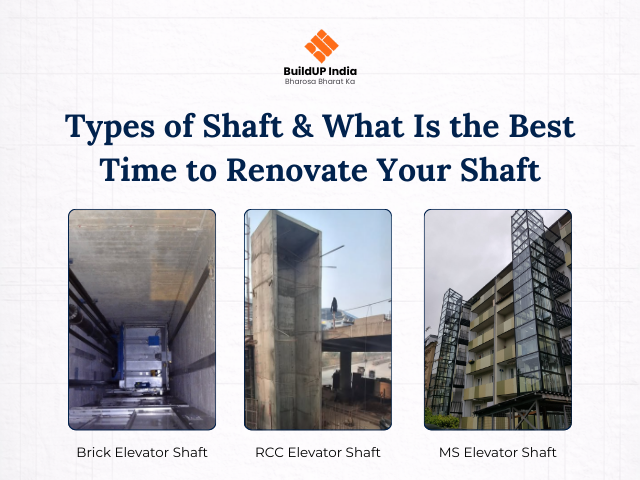
Elevator Shaft Construction refers to the creation of a vertical enclosure that houses the elevator system, including guide rails, doors, counterweights, and safety components. The shaft must be structurally sound, perfectly aligned, and compatible with the elevator design to ensure smooth and safe operation.
Why Proper Elevator Shaft Construction Is Critical
A well-executed Elevator Shaft Construction ensures:
Smooth and vibration-free elevator movement
Accurate alignment of guide rails and doors
Compliance with safety and fire regulations
Easy installation and future maintenance
Long-term structural stability
Because the shaft becomes a permanent part of the building, precision during construction is non-negotiable.
Step-by-Step Guide to Elevator Shaft Construction
Below is a comprehensive step-by-step breakdown of the Elevator Shaft Construction process.
Step 1: Planning and Design Coordination
The first and most important phase of Elevator Shaft Construction is planning. This includes:
Reviewing architectural and structural drawings
Coordinating shaft dimensions with elevator specifications
Finalizing pit depth and headroom requirements
Identifying load-bearing requirements
Planning door openings at each floor
Early coordination prevents dimensional errors and future modifications.
Step 2: Site Preparation and Marking
Once planning is finalized, the site is prepared for Elevator Shaft Construction:
Precise marking of shaft location on-site
Verification of plumb alignment using survey tools
Temporary safety barriers and access setup
Accurate site marking ensures the shaft is positioned exactly as designed.
Step 3: Excavation and Pit Construction
The pit is the lowest part of the shaft and a critical element in Elevator Shaft Construction:
Excavation as per approved pit depth
Base leveling and PCC application
Anti-termite treatment
Pit waterproofing to prevent seepage
The pit must be dimensionally accurate and moisture-resistant.
Step 4: Reinforcement and Shuttering
In this stage of Elevator Shaft Construction, reinforcement steel is placed:
Steel bars installed as per structural drawings
Shuttering fixed with precise alignment
Laser levels used to maintain verticality
Provision for guide rail inserts and door frames
Correct reinforcement and shuttering ensure structural strength and alignment.
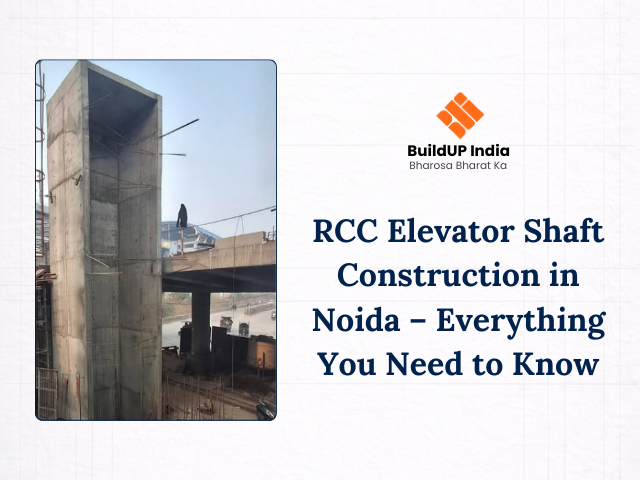
Step 5: RCC Casting of Shaft Walls
Concrete casting is a major milestone in Elevator Shaft Construction:
Concrete poured in controlled stages
Mechanical vibration to avoid honeycombing
Cube tests conducted to verify strength
Continuous monitoring of vertical alignment
High-quality concrete and proper curing are essential for durability.
Step 6: Curing and De-Shuttering
After casting, curing is carried out:
Regular curing to achieve design strength
Careful removal of shuttering
Visual inspection for cracks or defects
Proper curing enhances the lifespan of the shaft.
Step 7: Door Openings and Surface Finishing
At this stage of Elevator Shaft Construction, finishing works begin:
Accurate cutting and alignment of door openings
Internal wall plastering or smooth RCC finish
Installation of embedded items if required
Smooth surfaces reduce dust accumulation and improve elevator performance.
Step 8: Dimensional, Plumbness, and Safety Checks
Before handover, detailed checks are conducted:
Verification of internal shaft dimensions
Plumb and level checks using laser tools
Pit depth and headroom verification
Safety and access compliance review
This step ensures the shaft is ready for elevator installation.
Step 9: Final Handover for Elevator Installation
The final stage of Elevator Shaft Construction includes:
Submission of as-built drawings
Quality and test reports
Clearance for elevator installation
A properly handed-over shaft ensures seamless elevator installation.
Common Challenges in Elevator Shaft Construction
Water seepage in pits
Misalignment due to poor shuttering
Dimensional inaccuracies
Coordination gaps between civil and elevator teams
Water seepage in pits
Misalignment due to poor shuttering
Dimensional inaccuracies
Coordination gaps between civil and elevator teams
Professional execution helps avoid these issues.
Why Choose BuildUP India for Elevator Shaft Construction
BuildUP India brings technical expertise and precision-driven execution to Elevator Shaft Construction projects. Their approach includes:
Detailed planning and coordination
Use of modern alignment tools
Strong focus on safety and quality
On-time project delivery
BuildUP India treats elevator shaft construction as a critical structural foundation, not just a civil activity.
Conclusion
Elevator Shaft Construction is a specialized and step-driven process that demands accuracy, coordination, and technical excellence. From planning and excavation to RCC casting and final checks, every stage impacts elevator safety and performance.
With structured execution and professional expertise, companies like BuildUP India ensure elevator shafts are built strong, precise, and future-ready.
Frequently Asked Questions (FAQs)
1. What is the most important stage in Elevator Shaft Construction?
Planning and design coordination is the most critical stage, as errors here affect the entire project.
2. How long does Elevator Shaft Construction take?
Typically 4–8 weeks, depending on building height, design complexity, and curing time.
3. Why is pit waterproofing important?
Water seepage can damage elevator components and compromise safety, making waterproofing essential.
4. What material is best for elevator shaft construction?
RCC (Reinforced Cement Concrete) is the most commonly used and reliable material.
5. Can elevator shaft construction be done in an existing building?
Yes, but it requires structural assessment and careful execution.
6. How is shaft alignment checked?
Laser levels and plumb tools are used to maintain vertical alignment.
7. What happens if shaft dimensions are incorrect?
Incorrect dimensions can cause installation delays, rework, or elevator malfunction.
8. Why choose BuildUP India for Elevator Shaft Construction?
BuildUP India offers precision, safety compliance, and technical expertise, ensuring reliable and long-lasting elevator shafts.