Understanding Different Shaft Construction Materials: RCC vs Steel vs Brick
Understanding Different Shaft Construction Materials: RCC vs Steel vs Brick

Category
Shaft Construction
Date Released
27 December, 2025
When planning an elevator system, most people focus on the lift cabin, speed, and capacity. However, the real backbone of any lift system is the shaft. Elevator Shaft Construction plays a decisive role in safety, performance, durability, and long-term maintenance. One of the most important decisions during planning is choosing the right shaft construction material.
The three most commonly used materials in elevator shaft construction are RCC (Reinforced Cement Concrete), Steel, and Brick masonry. Each has its own advantages, limitations, and ideal use cases. This blog will help you understand the differences between RCC vs Steel vs Brick shafts, so you can make an informed decision for your building.
Why Shaft Construction Material Matters
The material used in elevator shaft construction directly impacts:
Structural strength
Fire safety
Alignment accuracy
Compatibility with modern elevators
Maintenance requirements
Lifespan of the elevator system
Choosing the wrong material can lead to frequent breakdowns, safety risks, and expensive renovations later.
Overview of Common Elevator Shaft Construction Materials
Let’s understand the three main materials used in elevator shaft construction and how they compare.
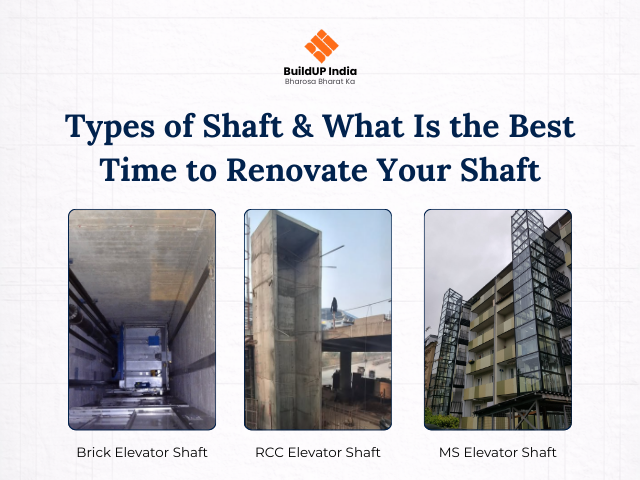
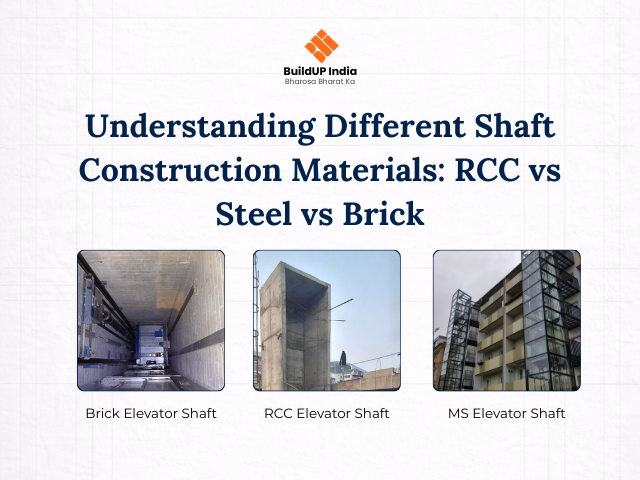
1. RCC (Reinforced Cement Concrete) Elevator Shaft
What Is an RCC Shaft?
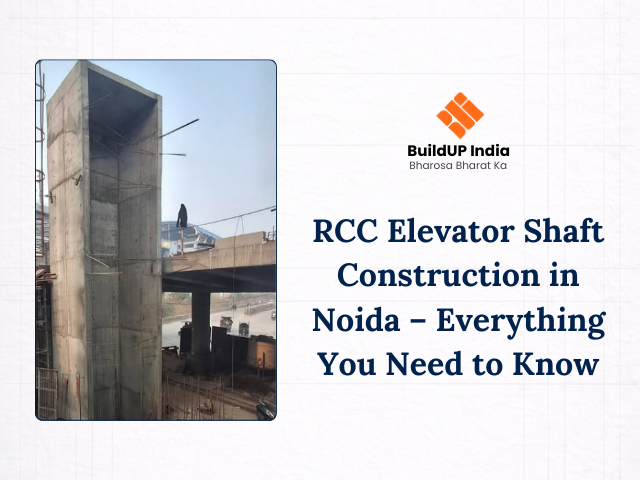
An RCC shaft is constructed using reinforced concrete walls integrated into the building’s structural framework. It is the most widely used method in modern elevator shaft construction.
Advantages of RCC Elevator Shaft Construction
High structural strength and stability
Excellent fire resistance
Long lifespan (matches building life)
Better vibration and noise control
Ideal for high-rise buildings
Supports heavy-duty and high-speed elevators
Limitations
Requires precise planning and execution
Construction time is longer compared to steel
Modifications after construction are difficult
Best Use Cases
Residential apartments
Commercial high-rises
Hospitals and institutional buildings
Due to its durability and safety, RCC is considered the industry standard for elevator shaft construction.
2. Steel Structure Elevator Shaft
What Is a Steel Shaft?
A steel shaft is constructed using fabricated steel sections and panels, often installed externally or added to existing buildings.
Advantages of Steel Elevator Shaft Construction
Faster installation time
Ideal for retrofitting in existing buildings
Lightweight compared to RCC
Flexible design options
Suitable for external lifts
Limitations
Requires corrosion protection
Lower fire resistance unless treated
Higher vibration and noise if not properly designed
Regular maintenance needed
Best Use Cases
Retrofitting elevators in old buildings
External glass or panoramic elevators
Low to mid-rise structures
Steel is often chosen when RCC elevator shaft construction is not feasible due to space or structural limitations.
3. Brick Masonry Elevator Shaft
What Is a Brick Shaft?
Brick shafts are built using traditional brick masonry and were commonly used in older buildings before RCC became standard.
Advantages of Brick Elevator Shaft Construction
Lower initial construction cost
Simple construction method
Easily available materials
Limitations
Lower structural strength
Poor fire resistance compared to RCC
Not suitable for high-speed elevators
Higher risk of cracks and misalignment
Limited compatibility with modern elevators
Best Use Cases
Low-rise buildings
Older constructions with limited load requirements
Today, brick masonry is generally not recommended for modern elevator shaft construction unless reinforced or upgraded.
Comparing RCC vs Steel vs Brick for Elevator Shaft Construction
From a long-term perspective, RCC remains the most reliable option for elevator shaft construction in modern buildings.
How to Choose the Right Shaft Construction Material
Selecting the right material for elevator shaft construction depends on several factors:
1. Building Height
High-rise buildings require RCC shafts due to strength and stability requirements.
2. New Construction vs Retrofitting
Steel shafts are preferred for retrofitting where RCC construction is impractical.
3. Elevator Type
High-speed and heavy-load elevators need RCC shafts for precise alignment and safety.
4. Budget and Timeline
Steel offers faster installation, while RCC offers better long-term value.
5. Safety and Compliance
RCC provides superior fire resistance and structural compliance.
Why Professional Execution Matters
Even the best material can fail if not executed correctly. Elevator shaft construction demands:
Accurate dimensional control
Vertical alignment precision
Proper waterproofing
Coordination with elevator specifications
BuildUP India approaches shaft construction with a strong focus on engineering accuracy, safety compliance, and long-term performance, ensuring the chosen material delivers its full benefits.
Future Trends in Elevator Shaft Construction
Modern buildings are moving toward:
RCC shafts designed for machine-room-less elevators
Hybrid RCC + steel systems for flexibility
Shafts planned for future elevator upgrades
Choosing the right material today ensures your building remains future-ready.
Conclusion
Understanding the differences between RCC, Steel, and Brick is essential for making the right decision in elevator shaft construction. While brick shafts may suit older or low-rise structures, they fall short for modern requirements. Steel shafts offer flexibility and speed, especially for retrofits, but require regular maintenance.
For most modern residential and commercial projects, RCC elevator shaft construction remains the most reliable, durable, and safe solution. With expert planning and execution by BuildUP India, elevator shafts are built to deliver long-term performance, safety, and efficiency.
Frequently Asked Questions (FAQs)
1. Which material is best for elevator shaft construction?
RCC is generally the best option due to its strength, fire resistance, and long lifespan.
2. Is steel shaft construction safe for elevators?
Yes, when properly designed and maintained, steel shafts are safe, especially for external or retrofit elevators.
3. Are brick shafts still used in elevator construction?
Brick shafts are mostly found in older buildings and are not recommended for modern high-speed elevators.
4. Can a brick shaft be converted into an RCC shaft?
Yes, through structural strengthening or internal RCC lining.
5. Which shaft material requires the least maintenance?
RCC shafts require the least maintenance over time.
6. Is elevator shaft construction possible in existing buildings?
Yes, steel or hybrid shafts are commonly used for retrofitting elevators.
7. Does shaft material affect elevator noise?
Yes, RCC shafts offer better vibration and noise control compared to steel and brick.
8. Why choose BuildUP India for elevator shaft construction?
BuildUP India ensures precise engineering, safety compliance, and durable execution across all types of elevator shaft construction.