Solar Power System for Homes in Delhi NCR: Installation & ROI
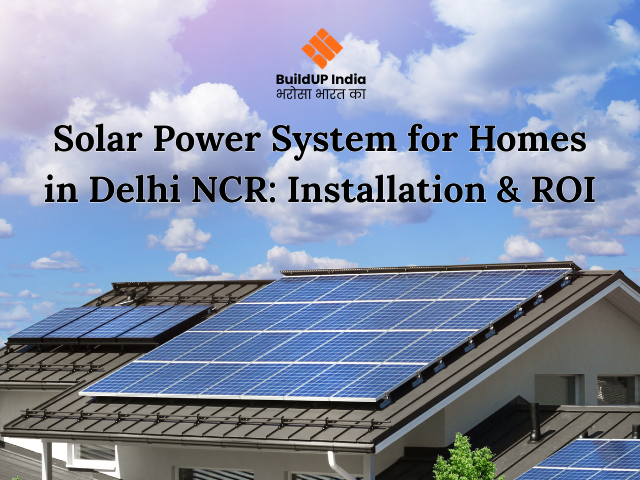
Solar Power System for Homes in Delhi NCR: Installation & ROI

Category
Solar Panel
Date Released
29 January, 2026
With rising electricity costs and growing awareness about clean energy, homeowners in Delhi NCR are increasingly shifting towards solar power. A well-planned solar power system for homes in Delhi NCR not only reduces monthly electricity bills but also delivers strong long-term returns on investment (ROI). Thanks to ample sunlight, improving policies, and advancing technology, residential solar has become both practical and profitable.
This blog explains everything you need to know about installing a solar power system for homes in Delhi NCR, including the installation process, costs, savings, and expected ROI—so you can make an informed decision for your home.
Why Solar Power Makes Sense for Homes in Delhi NCR
Delhi NCR enjoys good solar irradiation for most of the year, making rooftop solar a reliable energy source. Urban homes often have suitable terrace space, and grid connectivity enables efficient use of solar through net metering.
Key reasons homeowners in Delhi NCR are choosing solar include lower electricity bills, protection from future tariff hikes, reduced carbon footprint, improved property value, and long-term energy independence.
What Is a Solar Power System for Homes?
A residential solar power system converts sunlight into electricity using solar panels installed on your roof. The system typically includes solar panels, mounting structures, an inverter, DC and AC wiring, safety devices, and a connection to the grid (for grid-tied systems).
For most homes in Delhi NCR, grid-connected systems are preferred as they allow you to use solar energy during the day and draw power from the grid when needed, while exporting excess power back to the grid.
Types of Solar Power Systems for Homes in Delhi NCR
Grid-connected solar systems are the most common choice. They work alongside the utility grid and support net metering, helping homeowners offset their electricity bills.
Off-grid solar systems operate independently with battery storage. These are suitable for areas with unreliable grid supply but are less common in urban Delhi NCR due to higher costs.
Hybrid solar systems combine grid connectivity with battery backup, offering power during outages while still benefiting from net metering.
Step-by-Step Installation Process
The installation of a solar power system for homes in Delhi NCR follows a structured process to ensure safety, efficiency, and performance.
The first step is site inspection and energy assessment. Roof area, orientation, shading, and current electricity consumption are evaluated to determine the ideal system size.
Next comes system design and planning. Based on the assessment, the number of panels, inverter capacity, mounting structure, and safety layout are finalized to maximize energy generation.
After design approval, mounting structures are installed securely on the roof, ensuring weather resistance and proper tilt for optimal sunlight exposure.
Solar panels are then mounted on the structures with correct spacing and alignment. This step directly affects system performance.
The inverter and electrical wiring are installed next. Panels are connected to the inverter, which converts DC power into usable AC power for your home. Proper earthing and surge protection are critical at this stage.
Grid connection and net metering follow. The system is synchronized with the grid, and a net meter is installed to track energy import and export.
Finally, testing and commissioning are carried out. The system is tested for safety, performance, and efficiency before being handed over for regular use.
Cost of Solar Power System for Homes in Delhi NCR
The cost depends on system capacity, equipment quality, roof structure, and installation complexity. On average, residential solar costs in Delhi NCR typically range as follows:
A 1 kW system is suitable for small households with low consumption. A 3 kW system fits average family homes, while a 5 kW system is ideal for larger homes with higher usage.
While the upfront cost may seem significant, solar systems are long-term assets with low operating expenses.
Understanding ROI (Return on Investment)
ROI is one of the biggest reasons homeowners opt for solar. A well-installed solar power system for homes in Delhi NCR can deliver attractive returns.
Monthly savings come from reduced electricity bills. Most homeowners recover their initial investment within 4 to 6 years, depending on system size and usage.
After payback, the electricity generated is essentially free, leading to substantial savings over the system’s 25–30 year lifespan.
Solar systems also act as a hedge against rising electricity tariffs, improving ROI over time.
Factors That Affect Solar ROI in Delhi NCR
System size and efficiency play a major role. Higher efficiency panels generate more power in limited roof space.
Roof orientation and shading directly impact energy output. South-facing, shade-free roofs perform best.
Electricity consumption patterns matter. Homes with higher daytime usage benefit more from solar.
Quality of installation affects long-term performance and maintenance costs.
Regular maintenance, such as periodic cleaning and inspection, helps maintain optimal output and ROI.
Maintenance and Lifespan
Solar power systems require minimal maintenance. Occasional panel cleaning and annual electrical checks are usually sufficient.
With proper installation and care, solar panels last 25–30 years, while inverters may require replacement once during the system’s life.
Regular maintenance ensures consistent performance and protects your investment.
Why Choose BuildUP India for Residential Solar in Delhi NCR
BuildUP India provides end-to-end solutions for solar power systems for homes in Delhi NCR, focusing on performance, safety, and long-term value.
Their approach includes detailed site assessment, customized system design, quality-focused installation, and guidance on maintenance and performance optimization.
By emphasizing engineering accuracy and customer-specific solutions, BuildUP India helps homeowners achieve maximum ROI and reliable solar performance.
Conclusion
Installing a solar power system for homes in Delhi NCR is a smart and future-ready investment. From reducing electricity bills to delivering strong ROI and supporting sustainability, solar offers multiple long-term benefits.
With the right system design, professional installation, and proper maintenance, homeowners can enjoy clean, affordable energy for decades. BuildUP India’s structured and performance-driven approach ensures that residential solar systems in Delhi NCR are efficient, durable, and financially rewarding.
Frequently Asked Questions (FAQs)
Is solar power suitable for homes in Delhi NCR?
Yes, Delhi NCR receives sufficient sunlight, making rooftop solar highly effective.How much roof space is needed for a home solar system?
Approximately 100 square feet is required for 1 kW of solar capacity.How long does installation take?
Typically 2 to 5 days, depending on system size and site conditions.What is the average payback period for solar in Delhi NCR?
Most homeowners recover their investment within 4 to 6 years.Does solar work during power cuts?
Grid-connected systems stop during outages unless combined with battery backup.How long do solar panels last?
Solar panels generally last 25 to 30 years with proper maintenance.Is maintenance expensive?
No, maintenance costs are low and mainly involve periodic cleaning and inspection.Why choose BuildUP India for a solar power system in Delhi NCR?
BuildUP India offers customized design, safe installation, and performance-focused solutions that maximize long-term savings and ROI.