What Is an Elevator Shaft and Why Is It Essential in Modern Buildings?

What Is an Elevator Shaft and Why Is It Essential in Modern Buildings?

Category
Elevator SHaft
Date Released
29 January, 2026
- As cities grow vertically, elevators have become a necessity rather than a luxury. Behind every safe and smooth elevator system lies a critical structural element—the Elevator Shaft. While most people notice the elevator cabin and controls, the shaft is the backbone that supports the entire system. In modern buildings, the Elevator Shaft plays a vital role in safety, efficiency, and long-term performance.
This blog explains what an Elevator Shaft is, how it works, and why it is essential in modern buildings, especially as construction standards and building heights continue to evolve.
What Is an Elevator Shaft?
An Elevator Shaft is a vertical enclosed space constructed within a building that houses the elevator system. It provides a guided pathway for the elevator car to move safely between floors. The shaft contains critical components such as:
- Guide rails
- Counterweights
- Wiring and control cables
- Safety devices
- Ventilation and lighting provisions
The Elevator Shaft ensures controlled, stable, and protected vertical movement of the elevator car throughout the building.
Key Components Inside an Elevator Shaft
Understanding the internal elements highlights why the Elevator Shaft is such an important structural feature.
1. Guide Rails: These ensure the elevator car moves smoothly and stays aligned during travel.
2. Lift Pit: Located at the bottom of the shaft, the pit provides clearance for safety buffers and maintenance access.
3. Headroom: The space above the topmost floor allows safe operation and emergency movement of the elevator.
4. Counterweight System: Balances the elevator car to reduce load on the motor and improve energy efficiency.
5. Safety and Control Systems: Emergency brakes, sensors, and communication cables are all housed within the shaft.
Why the Elevator Shaft Is Essential in Modern Buildings
Modern architecture places high demands on safety, efficiency, and space optimization. The Elevator Shaft directly supports these requirements.
1. Structural Safety and Stability - The Elevator Shaft is often integrated with the building’s structural framework. Properly constructed shafts enhance overall building stability and resist lateral forces such as wind and seismic activity. A poorly designed shaft can compromise both elevator safety and building integrity.
2. Smooth and Reliable Elevator Operation - Accurate alignment and dimensional precision of the Elevator Shaft ensure:
- Vibration-free movement
- Reduced noise
- Lower wear and tear on elevator components
This directly improves passenger comfort and extends the lifespan of the elevator system.
3. Compliance With Modern Safety Standards - Modern building regulations require strict compliance with fire safety, structural integrity, and accessibility norms. A properly designed Elevator Shaft ensures:
- Fire-resistant enclosure
- Safe evacuation pathways
- Emergency access and lighting
- Protection of electrical systems
- Compliance is impossible without a well-engineered shaft.
4. Space Optimization in High-Rise Buildings - As land becomes more expensive, buildings grow taller. The Elevator Shaft allows efficient vertical transportation while occupying minimal floor area. Modern shafts are designed to accommodate high-speed elevators, machine-room-less systems, and compact layouts, making them essential for urban construction.
5. Energy Efficiency and Performance - The Elevator Shaft plays a role in energy efficiency by allowing:
- Proper counterweight balance
- Reduced friction through accurate guide rail alignment
- Compatibility with energy-efficient elevator systems
- An optimized shaft reduces power consumption and operational costs.
6. Long-Term Durability and Low Maintenance - A well-constructed Elevator Shaft protects elevator components from moisture, dust, and structural movement. This reduces breakdowns and maintenance frequency, saving costs over the building’s lifecycle.
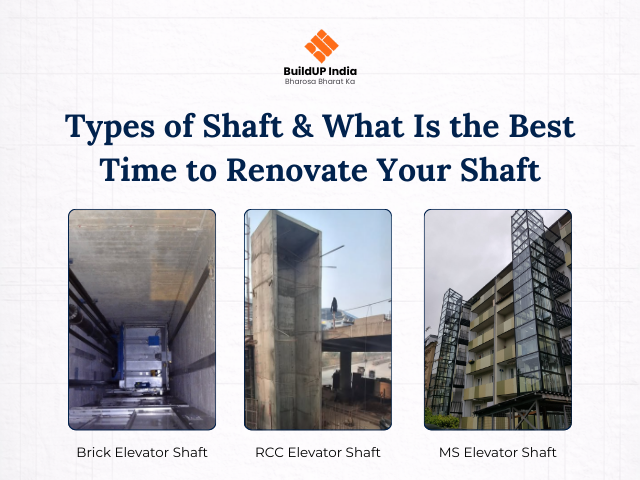
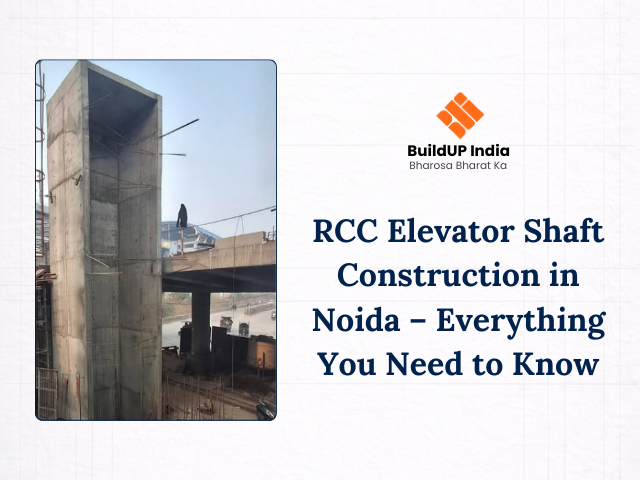
RCC Elevator Shaft
This is the most common type used in residential and commercial buildings. RCC (Reinforced Cement Concrete) shafts offer:
- High structural strength
- Excellent fire resistance
- Long-term durability
- Strong load-bearing capacity
RCC shafts are ideal for new constructions where the lift is planned during the initial building design phase.
Steel Structure Shaft
Steel shafts are mainly used for:
- External elevator installations
- Retrofitting lifts in existing buildings
- Projects where faster execution is required
They are lighter than RCC structures and can be installed more quickly. Steel shafts are commonly chosen when internal space is limited.
Brick Elevator Shaft
Brick shafts are sometimes used in low-rise residential buildings. They are:
- Cost-effective
- Suitable for smaller projects
- Easier to construct in traditional construction setups
However, brick shafts require proper reinforcement and structural planning to ensure strength and alignment. They are generally used where building height and load requirements are moderate.
Common Issues Caused by Poor Elevator Shaft Design
An improperly designed or constructed Elevator Shaft can lead to:
- Frequent elevator breakdown
- Excessive noise and vibration
- Water seepage into the pit
- Misalignment of doors and cabins
- Safety hazards
These issues highlight why professional planning and execution are essential.
Role of Professional Expertise in Elevator Shaft Construction
Constructing an Elevator Shaft is not just a civil task—it requires coordination between architectural, structural, and elevator system requirements. BuildUP India approaches elevator shaft planning and execution with a focus on:
- Structural precision
- Safety compliance
- Long-term durability
- Compatibility with modern elevators
This integrated approach ensures reliable elevator performance throughout the building’s life.
Future of Elevator Shafts in Modern Architecture
With the rise of smart buildings and advanced elevator technologies, the Elevator Shaft is evolving. Modern shafts are being designed to support:
- High-speed elevators
- Smart monitoring systems
- Space-saving configurations
- Future elevator upgrades
Forward-thinking shaft design ensures adaptability and long-term value.
Conclusion
The Elevator Shaft is the foundation of any elevator system and a critical element of modern building design. It ensures safety, efficiency, durability, and compliance with evolving construction standards. From supporting smooth elevator movement to enhancing structural integrity, the role of the Elevator Shaft cannot be overstated.
With professional expertise and precision-driven execution, BuildUP India ensures elevator shafts are built to meet modern demands—strong, safe, and future-ready.
Frequently Asked Questions (FAQs)
1. What is the main purpose of an Elevator Shaft?
The main purpose of an Elevator Shaft is to provide a safe, guided, and enclosed path for elevator movement.
2. Is an Elevator Shaft mandatory in all multi-storey buildings?
Yes, buildings above certain heights require elevators and properly designed shafts as per building regulations.
3. What material is best for an Elevator Shaft?
RCC (Reinforced Cement Concrete) is the most commonly used due to its strength and fire resistance.
4. Can an Elevator Shaft be added to an existing building?
Yes, but it requires structural assessment and careful design to ensure safety.
5. Why is shaft alignment important?
Proper alignment ensures smooth elevator movement and prevents long-term mechanical issues.
6. What happens if an Elevator Shaft is not waterproofed?
Lack of waterproofing can cause water seepage, corrosion, and damage to elevator components.
7. How long does an Elevator Shaft last?
With proper construction and maintenance, an Elevator Shaft can last the entire life of the building.
8. Why choose BuildUP India for Elevator Shaft solutions?
BuildUP India provides technically sound, safety-compliant, and durable elevator shaft solutions tailored for modern buildings.